


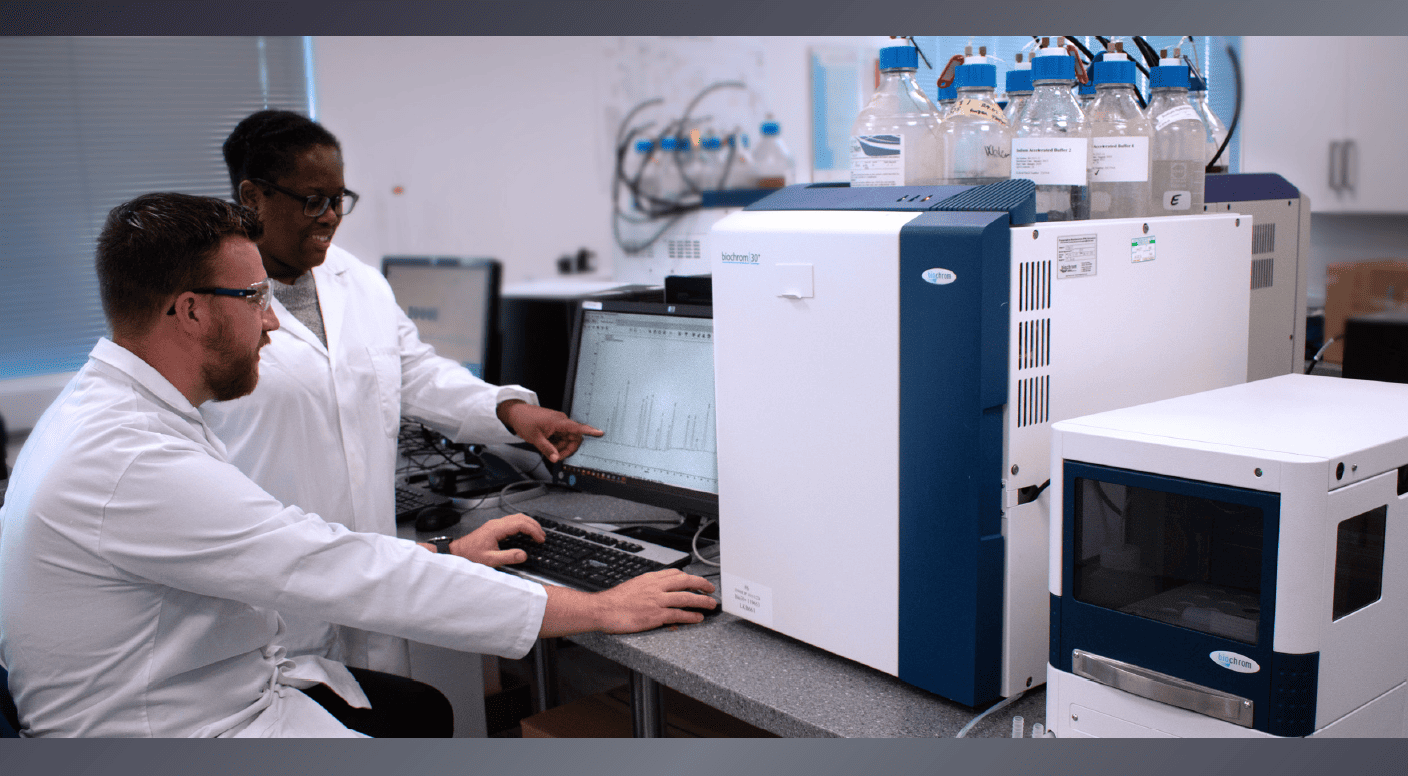
What is an amino acid analyser and how does it work?
The quantitative determination of amino acids is one of the more analytically demanding routine tasks in the laboratory. Despite modern chromatographic methods, it requires a methodically clean, reproducible and long-term stable solution. Dedicated amino acid analysers have been developed precisely for this purpose.
Why amino acids are analytically challenging
Amino acids are small, highly polar molecules with very similar chemical properties. Many differ only slightly in structure and charge, have no distinct chromophoric groups, and are sensitive to changes in the sample matrix.
In addition, they occur in very different forms:
- as free amino acids
- as a component of proteins
- in complex, often heavily loaded matrices
For analysis, this means that separation, detection and quantification must function reliably and independently of the sample – especially in routine operation.
Basic principles about an Amino Acid Analyzer
An amino acid analyser is a specialised chromatographic system designed specifically for the analysis of amino acids. Unlike universal HPLC systems, it follows a clearly defined, proven analytical procedure that has been used in routine and reference laboratories for decades.
Separation on ion exchange columns
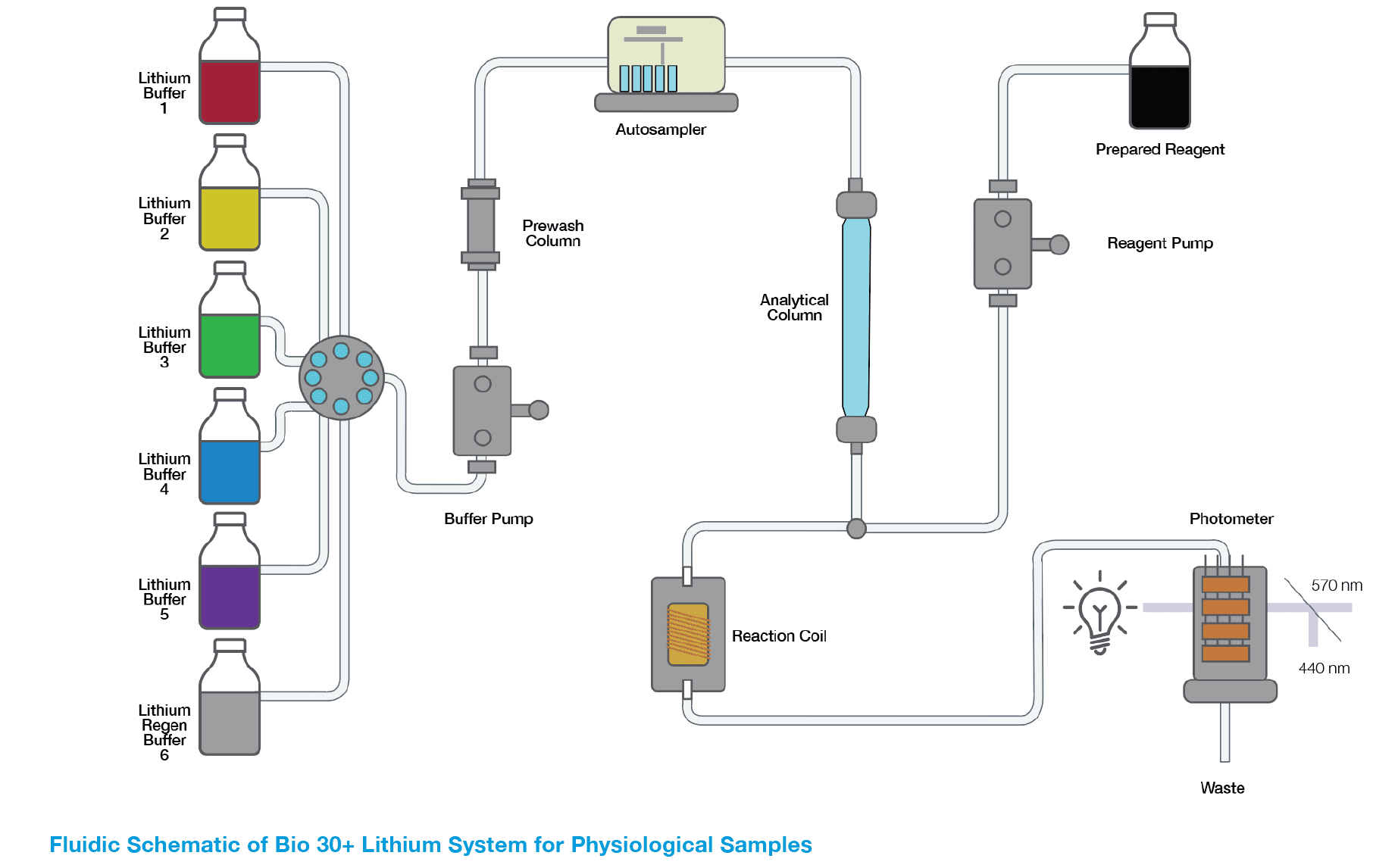
Chromatographic separation is performed on ion exchange columns. Amino acids are separated from each other based on their charge and pH-dependent behaviour.
This separation principle offers:
- high selectivity
- excellent reproducibility
- low dependence on the sample matrix
This is a significant advantage, especially when dealing with different types of samples.
Post-column derivatisation with ninhydrin
Since amino acids themselves are hardly detectable directly, detection is carried out via post-column derivatisation. After chromatographic separation, the amino acids react with ninhydrin, producing stable coloured reaction products.
The crucial point here is:
- Derivatisation takes place after separation.
- Chromatography is not affected
- The reaction is reproducible for every amino acid.
This procedure is methodologically robust and therefore remains state of the art to this day.
Photometric detection and quantification
The dyes formed are detected photometrically. The signal intensity is proportional to the concentration of the respective amino acid. In conjunction with suitable calibration standards, amino acids can be determined precisely and quantitatively – even over long measurement series.
Which samples can be analysed?
Amino acid analysers are suitable for a wide range of samples:
Free amino acids
- fermentation media
- Food and feed samples
- biochemical and clinical samples
Hydrolysed protein samples
- Proteins are hydrolysed prior to analysis.
- The released amino acids are then determined.
- Established for protein characterisation and quality control
Complex matrices
Thanks to the stable separation and detection concept, even difficult sample matrices can be analysed reliably and reproducibly.
Typical areas of application in everyday laboratory work
An amino acid analyser is used wherever comparable and reliable results are paramount:
- Routine analysis with constant sample throughput
- quality control
- Methods with normative or regulatory requirements
- Long-term investigations and reference measurements
In these areas, it is not speed that is crucial, but methodological certainty.
When is a dedicated amino acid analyser useful?
The use of a dedicated system is particularly useful if:
- Amino acids are determined regularly.
- Reproducible results over long periods of time are required.
- different sample matrices are analysed
- Method development should be avoided
In short: when reliability and comparability are priorities in everyday laboratory work.
Summary
An amino acid analyser is a specialised analysis system for a clearly defined task. Through the combination of ion exchange chromatography, post-column derivatisation and photometric detection, it enables precise, reproducible and long-term stable amino acid analysis.
Let’s Discuss Your Specific Requirements
We take the time to truly understand your situation. What types of samples are you analyzing? What is your weekly throughput? What are your specific requirements for reproducibility and system uptime?
In a direct conversation, we’ll determine if the Biochrom B30Plus is the right fit for your workflow - and how we can support you for the long term. No pressure, just practical advice from experts who speak your language.
Proven Performance. For Over 25 Years.

Years on the Market

of All Issues resolved over the phone

Response Time

Key players across 8 countries
